On Place and Perspective
How living in different landscapes changes what we notice.
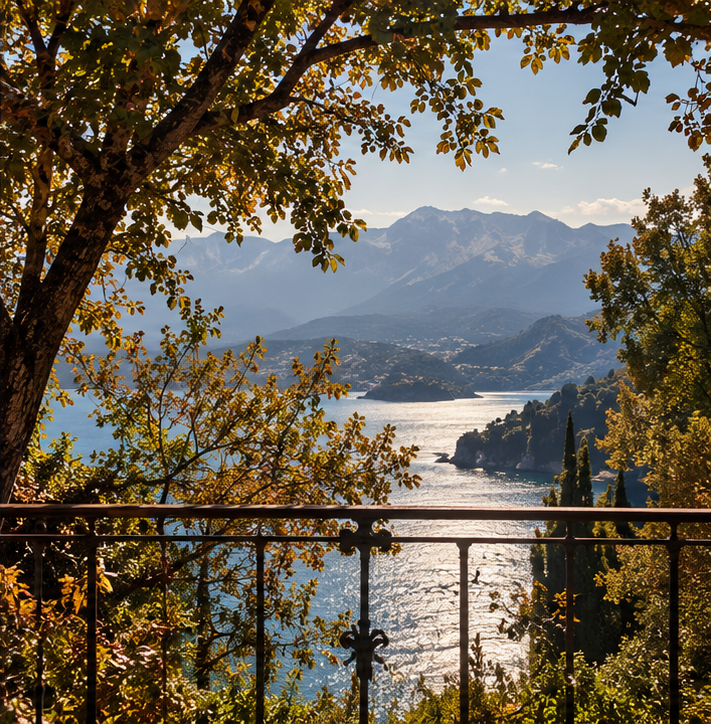
The distance between two places can be measured in kilometres, but the difference between them is rarely understood through distance alone.
A landscape is experienced through its light, climate, vegetation, architecture and the habits of the people who live there. These details become familiar through repetition, until we begin to recognise a place without consciously examining what makes it distinctive.
Having lived in Australia, Scotland and France, I have become increasingly interested in how our understanding of a landscape changes through experience.
The differences are sometimes immediate.
The intensity of sunlight, the colour of the earth, the height of the trees and the quality of the air can make one place feel entirely unlike another. Yet the more time we spend somewhere, the more subtle distinctions begin to emerge.
We learn which direction the weather approaches from, how the light moves across a particular room and when the first signs of a new season are likely to appear.
These observations gradually form an intimate knowledge of place.
Australia belongs to my childhood, and with that comes a particular kind of memory.
The landscapes we encounter when we are young can establish our earliest sense of scale, distance and climate. We may not understand how strongly those surroundings have influenced us until we experience somewhere different.
A childhood landscape becomes a reference point, even when we have lived elsewhere for many years.
Scotland offers a very different relationship with the seasons.
The changes in daylight are pronounced, particularly between midsummer and midwinter. Long summer evenings extend the hours in which it is possible to be outdoors, while winter brings a much earlier darkness.
The weather can move rapidly across the hills, altering the appearance of a landscape within minutes. A distant ridge may be clearly visible in the morning and disappear behind low cloud by afternoon.
The colours are often subdued, with greens, greys and browns that shift according to the moisture in the air and the direction of the light.
I find the changing weather particularly interesting because it affects how we experience the same surroundings.
A path walked in bright sunshine feels different after rain. The surface of the ground changes, the vegetation releases a different scent, and familiar trees take on a new appearance against the sky.
In Provence, the contrasts are different.
Summer brings an intensity of heat and light that shapes the working day. Roads are lined with plane trees, their broad canopies providing shade, while rows of cypress protect orchards from the mistral.
The landscape carries evidence of generations of adaptation to the climate.
Stone buildings, shutters, shaded terraces and the arrangement of cultivated fields reveal practical responses to the conditions of the region.
What first appears to be a distinctive architectural or agricultural style often has an explanation rooted in geography and weather.
I enjoy discovering these connections because they reveal how closely a place and its inhabitants have influenced one another.
The landscape is never entirely separate from human activity. Fields have been cultivated, trees planted, roads constructed and settlements established in response to the opportunities and limitations of the terrain.
Even places that appear largely natural may carry traces of earlier generations.
Understanding these histories changes how we look at what surrounds us.
A line of trees may have been planted to provide shelter. A terrace cut into a hillside may reflect centuries of agricultural practice. The position of a village may have been determined by access to water, fertile ground or protection from the weather.
What initially attracts us through its appearance can become more interesting when we begin to understand its purpose.
I have found that living in different places also changes how I see the places I return to.
When we spend a long time somewhere, familiarity can make certain details less noticeable. We follow the same roads, recognise the same buildings and move through our surroundings with little need to examine them closely.
After time away, those details can become visible again.
The light may seem different from how we remembered it. The proportions of a landscape become more apparent. We notice the character of the trees, the shape of the streets or the sounds that belong to a particular place.
The surroundings may have changed very little, yet our experience of them has altered.
This interests me because perspective is often treated as something we gain by travelling to unfamiliar destinations. But returning can be equally revealing.
Distance allows us to compare, and comparison can expose assumptions we were scarcely aware of holding.
We may discover that something we considered ordinary is particular to a certain climate or culture. A daily habit that seemed natural in one place may be unusual in another.
Meal times, the use of public space, the pace of the working day and the relationship between indoor and outdoor life all vary according to history, climate and custom.
Living across different countries has made me more aware of these distinctions, and more cautious about assuming that familiar arrangements are universal.
It has also encouraged me to pay attention to the language we use to describe places.
Words such as beautiful, harsh, peaceful or remote may tell us as much about the observer as they do about the landscape.
A place described as remote by a visitor may be home to people whose knowledge of it is detailed and longstanding. A climate that feels difficult to someone arriving from elsewhere may have shaped local traditions, architecture and livelihoods over centuries.
Our impressions are real, but they are incomplete.
They are influenced by where we have come from, what we have experienced and how long we have had to understand what we are seeing.
Perhaps this is one of the more valuable lessons of living in different places: the recognition that every landscape can be approached from more than one perspective.
There is the first impression, formed through unfamiliarity. Then there is the knowledge gained through repeated visits, daily routines and the observation of change.
Over time, a place becomes associated with experiences that are difficult to separate from its physical characteristics.
A particular road may recall a period of life. A view from a window may become familiar through years of changing seasons. The scent of vegetation after rain may bring back memories of another country.
These associations become part of our understanding of place, even though they are not visible to someone encountering it for the first time.
I think this is why belonging cannot always be explained through geography.
We may feel connected to more than one landscape, each associated with different periods of life and different ways of seeing the world.
Australia remains connected with my earliest experiences. Scotland and France have each contributed to the life I have lived since, offering contrasting climates, histories and surroundings.
I would find it difficult to reduce their significance to a comparison of which place I prefer.
Each has taught me to notice something different.
And when I move between them, I carry those observations with me. The experience of one landscape influences how I understand another, adding another layer to what I recognise and what I am still learning to see.